Women of Color Artist Award: by blood. by guide. by call. Curated by Ariel Collier
Photography by Vadimovna Studio
Wall Text
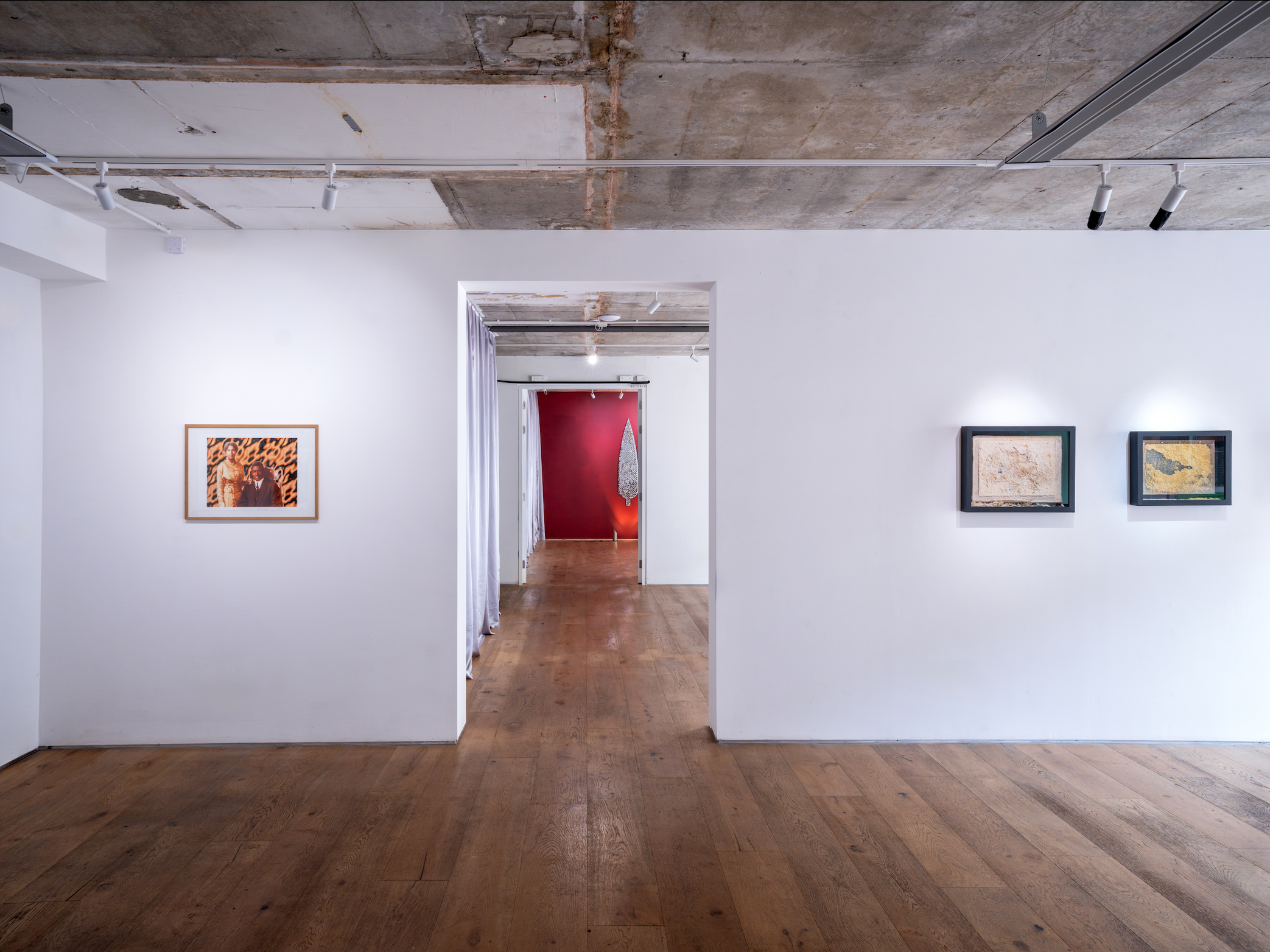
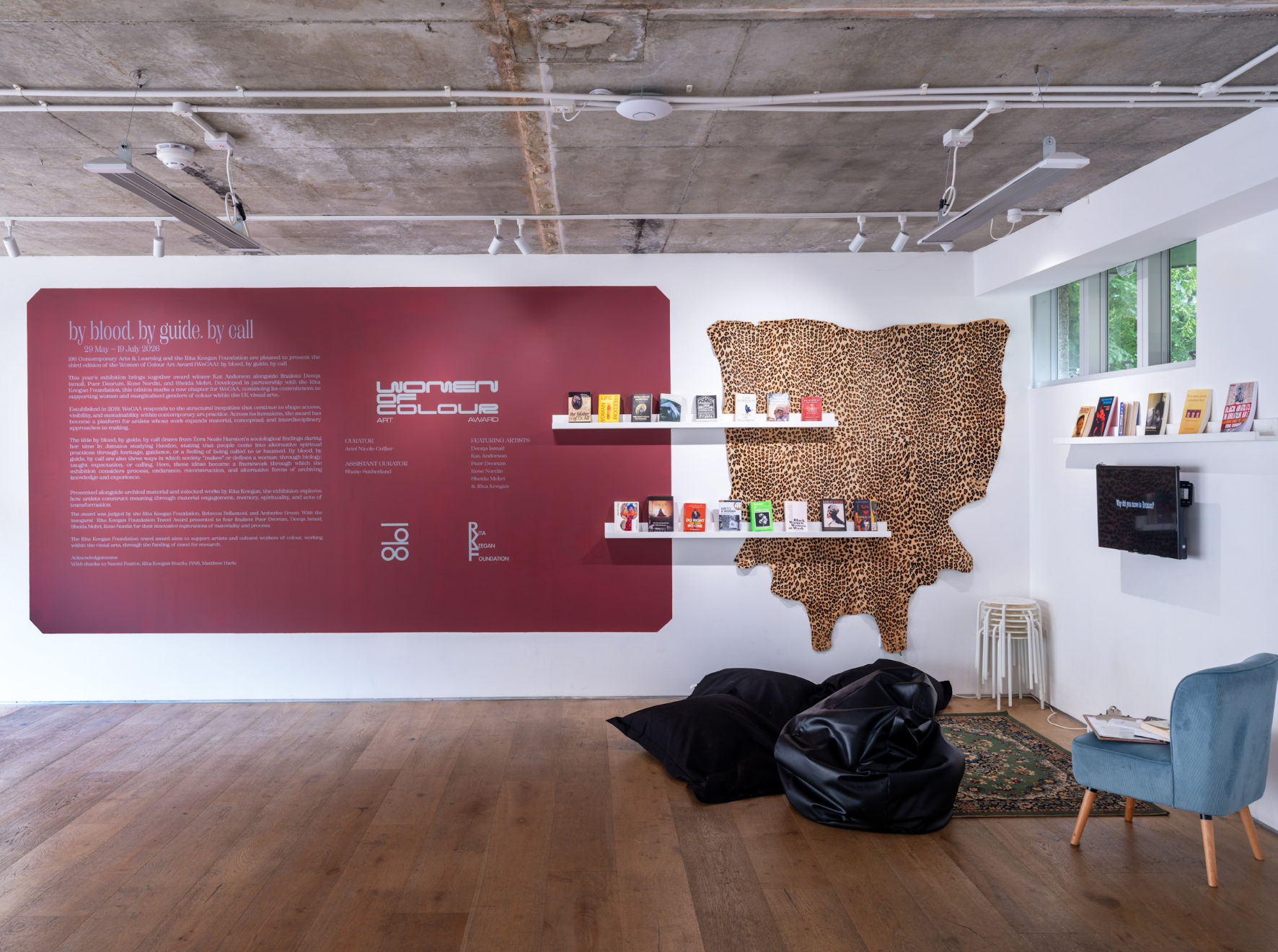
198 Contemporary Arts & Learning and the Rita Keegan Foundation are pleased to present the third edition of the Women of Colour Art Award (WoCAA): by blood. by guide. by call, curated by Ariel Nicole Collier.
This year’s exhibition brings together award winner Kat Anderson alongside finalists Deeqa Ismail, Puer Deorum, Rose Nordin, and Sheida Mehri. Developed in partnership with the Rita Keegan Foundation, this edition marks a new chapter for WoCAA, continuing its commitment to supporting women and marginalised genders of colour within the UK visual arts sector.
Established in 2019, WoCAA responds to the structural inequities that continue to shape access, visibility, and sustainability within contemporary art practice. Across its iterations, the award has become a platform for artists whose work expands material, conceptual, and interdisciplinary approaches to making.
The title by blood, by guide, by call draws from Zora Neale Hurston’s sociological findings during her time in Jamaica studying Hoodoo, stating that people come into alternative spiritual practices through heritage, guidance, or a feeling of being called to or haunted. By blood, by guide, by call are also three ways in which society "makes" or defines a woman: through biology, taught expectation, or calling. Here, these ideas become a framework through which the exhibition considers process, endurance, reconstruction, and alternative forms of archiving knowledge and experience.
Presented alongside archival material and selected works by Rita Keegan, the exhibition explores how artists construct meaning through material engagement, memory, spirituality, and acts of transformation.
The award was judged by the Rita Keegan Foundation, Rebecca Bellantoni, and Amberlee Green. With the inaugural Rita Keegan Foundation travel award presented to four finalists Puer Deorum, Deeqa Ismail, Sheida Mehri, Rose Nordin for their innovative explorations of materiality and process.
Reading Corner curated by Ariel Nicole Collier, Photography by Vadimovna Studio
The Curatorial
Phenomenological Interpretation via Ecstatic Poetry
by blood
by guide
by call
she crawls
towards the sugar
the wood
the blade as key
she forges into metal and leather
bristles of everything fly
each hand a different soul
a different history molded
and
contended with
endured
a repetition creates a ritual
a ritual creates a space
the space creates a moment
a moment is kept
and the keeping creates an archive
her feet is wet from sweating in her sleep
dreams of those kept close,
and those cut off
the faceless patterns
making way for some other substance
Photography by Vadimovna Studio
Descriptions of Work | Endurance, Deconstruction, Reconstruction, and Alternative Archives
Kat Anderson (Winner)
This exhibition begins with Mark of Cane by Kat Anderson. In a meditative process she shaves, crushes, and irons the cane of sugar to make pulp and remove fibres, which are then adhered to paper, resulting in a map-like configuration. Something lingers here , in tracing out potential embodied rhythms and a familiarity with the material likely known by her ancestors. This connection through labour creates a ritual space for reckoning with the long-term effects of the exploitation of that labour. Instead of doing it for someone else, Kat interacts with these materials under her own free will. Anderson wants us to:
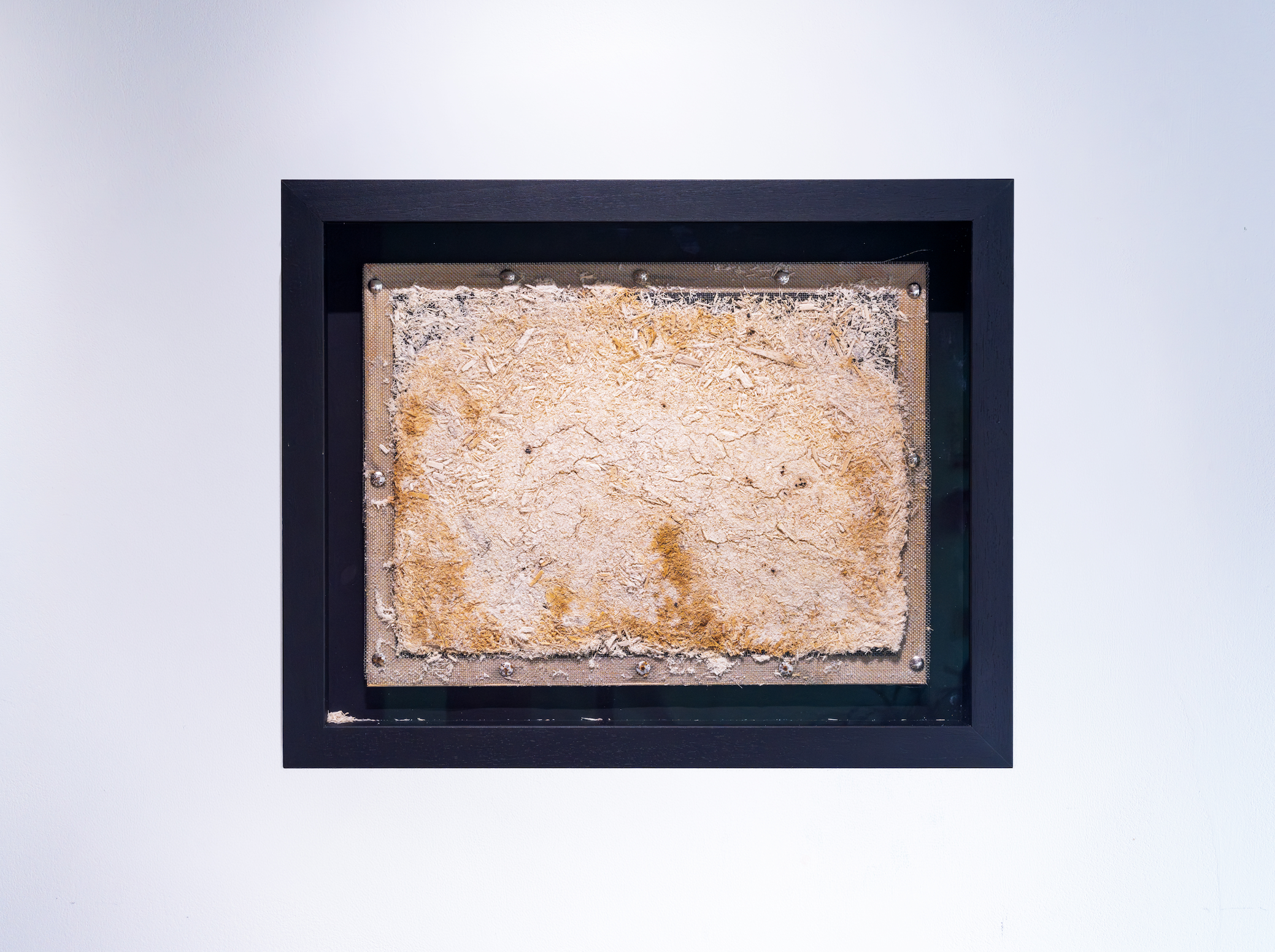
Untitled (#3) Sugarcane Paperwork (463 mm x 363mm), Framed, Photography by Vadimovna Studio
"recognise the humanity and suffering of Black people, not as entertainment, but as part of the full human story."
Kat's practice with her materials is extremely tedious. The molecular memory of these sugarcane fibres are part of the legacy of Afro-Caribbean descendants of slaves , fibres passed down from generation to generation, sticking to hair, bones, and brains. An irreversible trauma. Despite this, Anderson aims to create a new origin story, inspiring us to do the same.
For Wynter, inclusion is not the same as humanisation. If the definition of the human was built by excluding certain peoples as less than rational, less than civilised, less than fully real , then inviting those peoples into that definition changes nothing fundamental. The architecture of exclusion remains. Thereby calling for a reconfiguration of the beginning. Deconstruct. Reconstruct.
Rose Nordin
We can smell Rose Nordin's ghost scent, Burnt Cargo, burning in a metal vessel. Nordin uses scent and metal to speculate on the memory of stolen ecology, working with tin as historically tied to colonial extraction in the region. She explores casting as a devotional process, one that considers tropical futurism and symbology. The vessel contains scent compositions from the Bornean tropics, holding ecological atmospheres shaped by migration and displacement. The scent contains notes of jungle humidity, charred wood, sea salt, tropical fruit, tiger fur, Javanese orchids, and rot.
Burnt Cargo is a speculative ghost scent developed from archival fragments, folklore, and plant histories of Southeast Asia, reflecting on the colonial extraction carried out through botanical sampling. The scent captures a historic shipwreck of a Dutch colonial vessel that carried botanical and animal samples from Java, gathered by botanist Georg Rumphius. It captures a moment of planetary intervention , the flood and fire that shipwrecked and sank years of collection and extraction mid-journey.
Nordin is fascinated by the fact that the sunken ship was seen as a blessing. Using both digital and manual methods, she creates her finished pieces by rolling the incense by hand, filling the vessels with soil, and placing the incense as an offering , blending Malaysian animist practices with traditional Islamic meditation. We meet this artist on cursed land. We join her in prayer for colonial hegemony to also sink and give way.
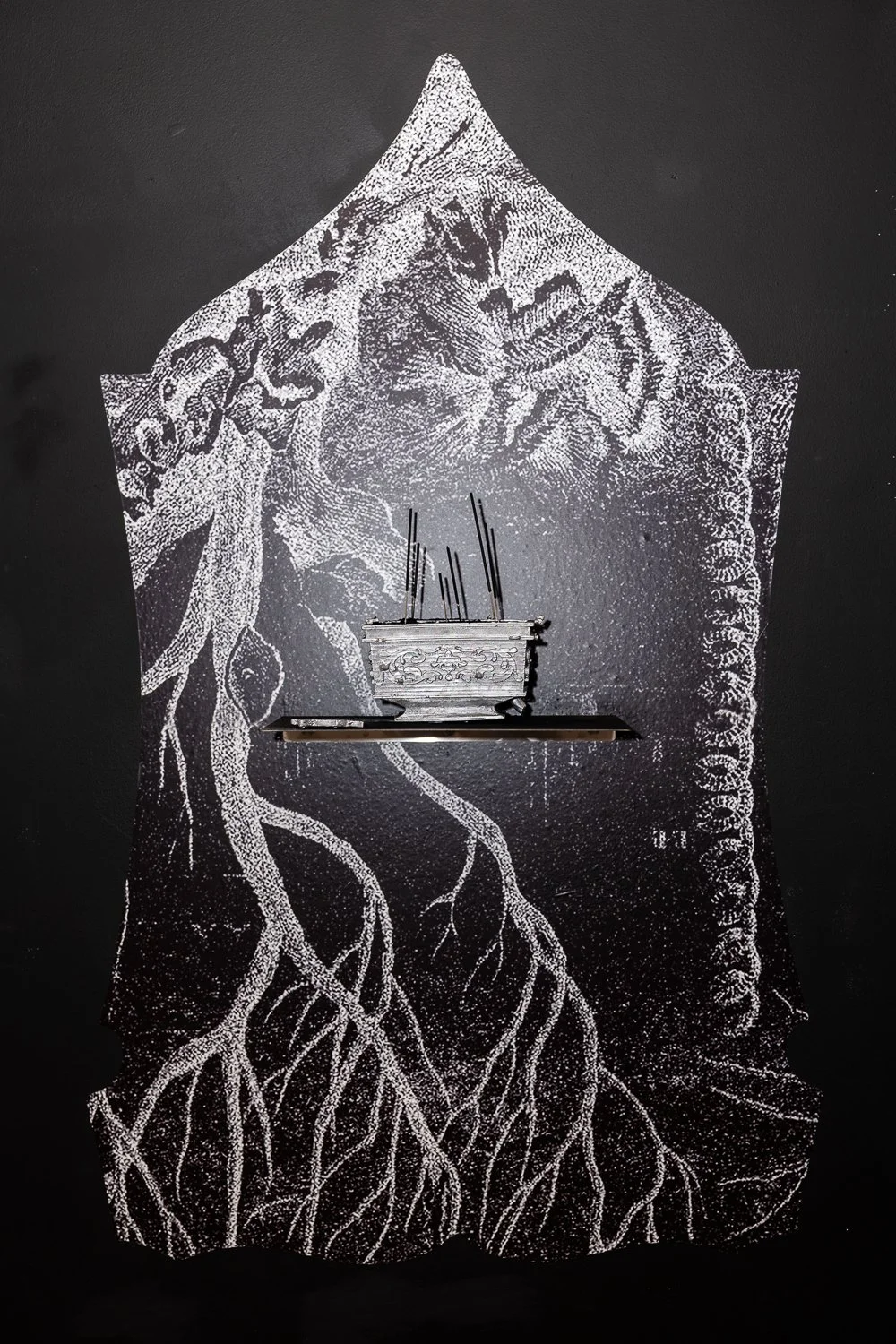
Burnt Cargo, Metal, Charcoal and Incense, 2026, Photography by Vadimovna Studio
Sheida Mehri
Destroying a mirror through cutting and then composing its fragments through precision, Sheida Mehri's Cypress reconstructs the meaning of the Persian cypress , a symbol of endurance , as a woman's body. There is no single image in the mirror, therefore no single definition, directly challenging hegemonic notions of meaning.
Composed of over 1,000 individually cut fragments, assembled through approximately 80 hours of meticulous manual labour, Mehri reinterprets the cypress as both an upright body and a vertical axis of persistence. Each mirrored piece is precisely measured and cut, foregrounding repetition, care, and sustained physical engagement. Fragmentation here is not rupture but construction , a deliberate assembling of presence.
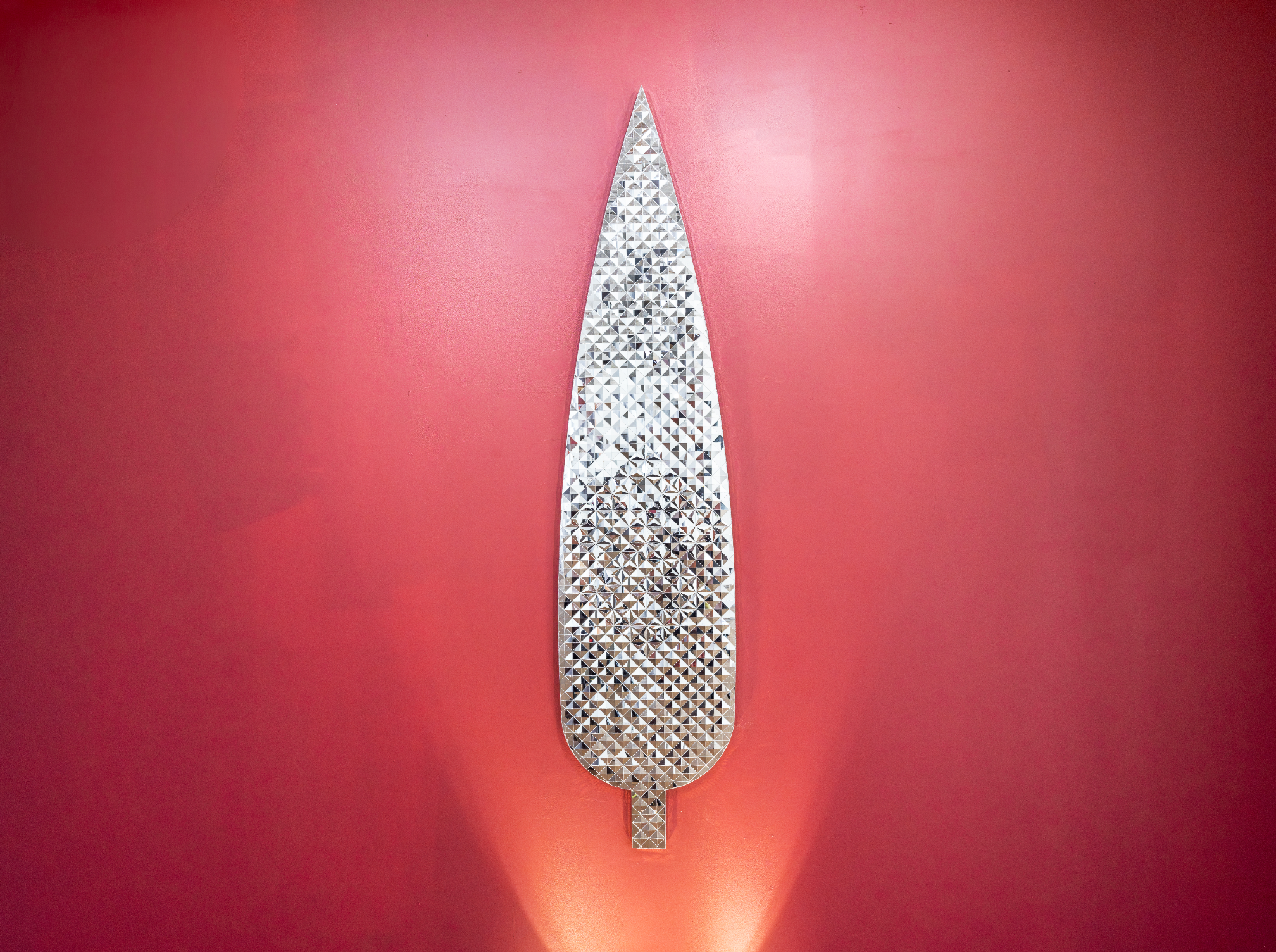
Cypress (Fragmented Presence), Mirror, (180x 40 cm), 2026, Photography by Vadimovna Studio
Light activates the surface. As viewers move, reflections fracture and reform, multiplying the body across shifting planes. The work resists a singular image, instead offering a dispersed yet continuous visibility. Mehri's work is also a metaphor for layered crisis , an infinite accumulation of images. Humans endure each other's cruelty over and over again, until the human is redefined.
Puer Deorum
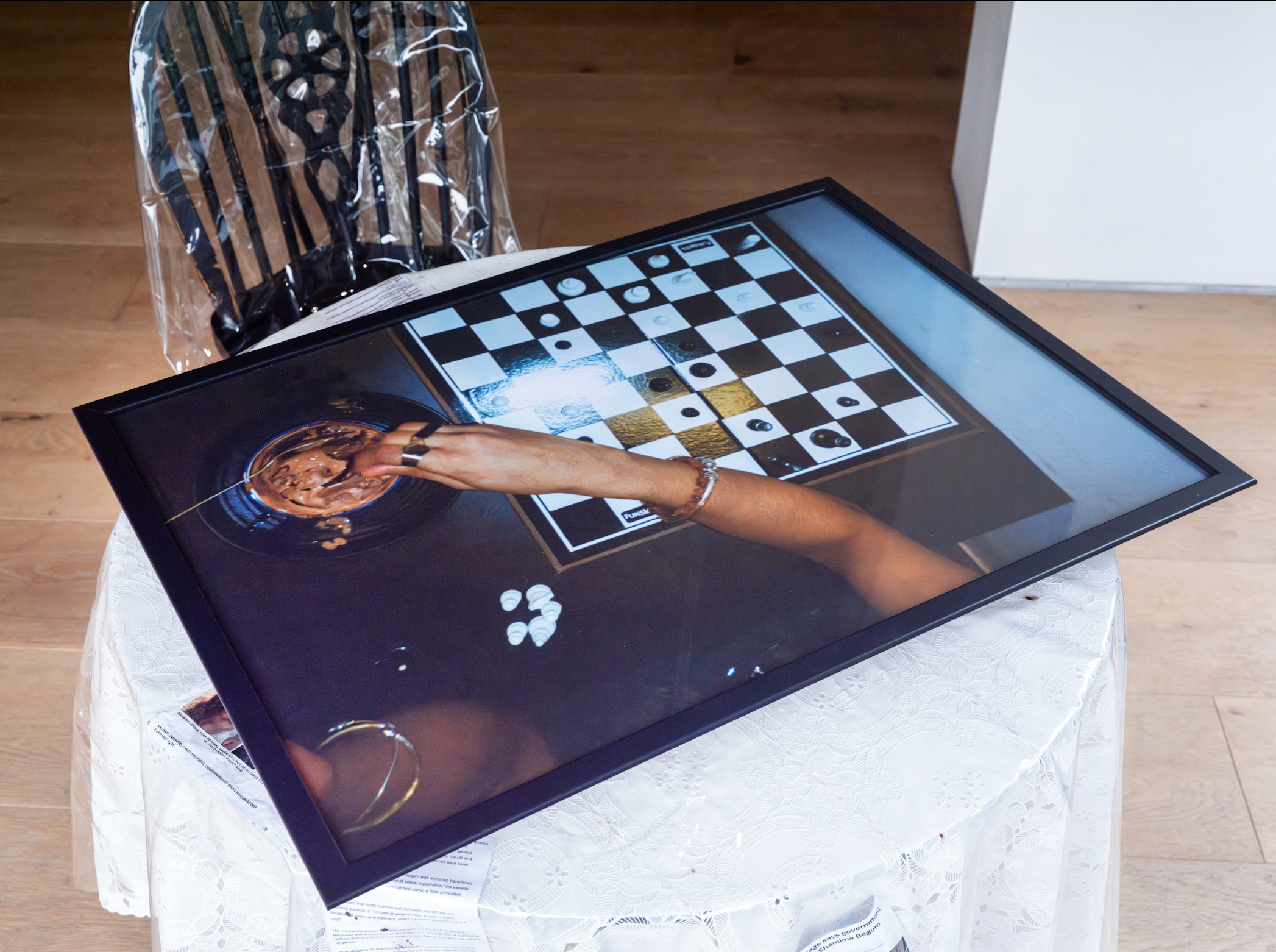
Conversations at the Table, Found Table and Chairs, Digital Prints of Online News Articles on PVC and Vinyl Tablecloths, Wood from Found Shipping Pallet, 2025, Photography by Vadimovna Studio
Puer Deorum's materiality works through poetic metaphor and satire. A cello is a woman's body. Excessive media coverage of Shamima's story makes her a pawn, a couch is an archive.
In 2018–2024 Photo Album, Deorum cuts out the heads and bodies of loved ones lost, disrupting and rewriting their personal archive, placing the images on a found leather sofa and constructing a new one, symbolic of an intimacy once had.
In Conversations at the Table, digital prints of online news articles about Shamima Begum are placed on PVC and vinyl tablecloths across a found table and chairs, with wood from a found shipping pallet holding up an image of friends playing chess. Deorum invites us to see the game being played by the UK government's hyperfocus on Begum as a divisionist and anti-immigration tool.
In hold me while my mind falters, Deorum yields a cello in an act of exploration, meditating on its physical capabilities through improvised sound and movement. Teasing apart the complex, liminal space between romance and friendship, the solo-play uses the cello as a metaphor for sapphic longing and bodily experience. Through moving images, performance, and prose, they draw us close, blurring the lines between romance, friendship, and intimacy.
Deorum does not make work for the audience. The work is at once literally metaphorical, personal and distant, quiet and loud. It does not exist within polarities. It goes beyond them, expanding our relationship with the theme of endurance by placing us physically within the work. Deorum curates their own symphony of expression, creating artworks as vessels to the narrative.
Deeqa Ismail
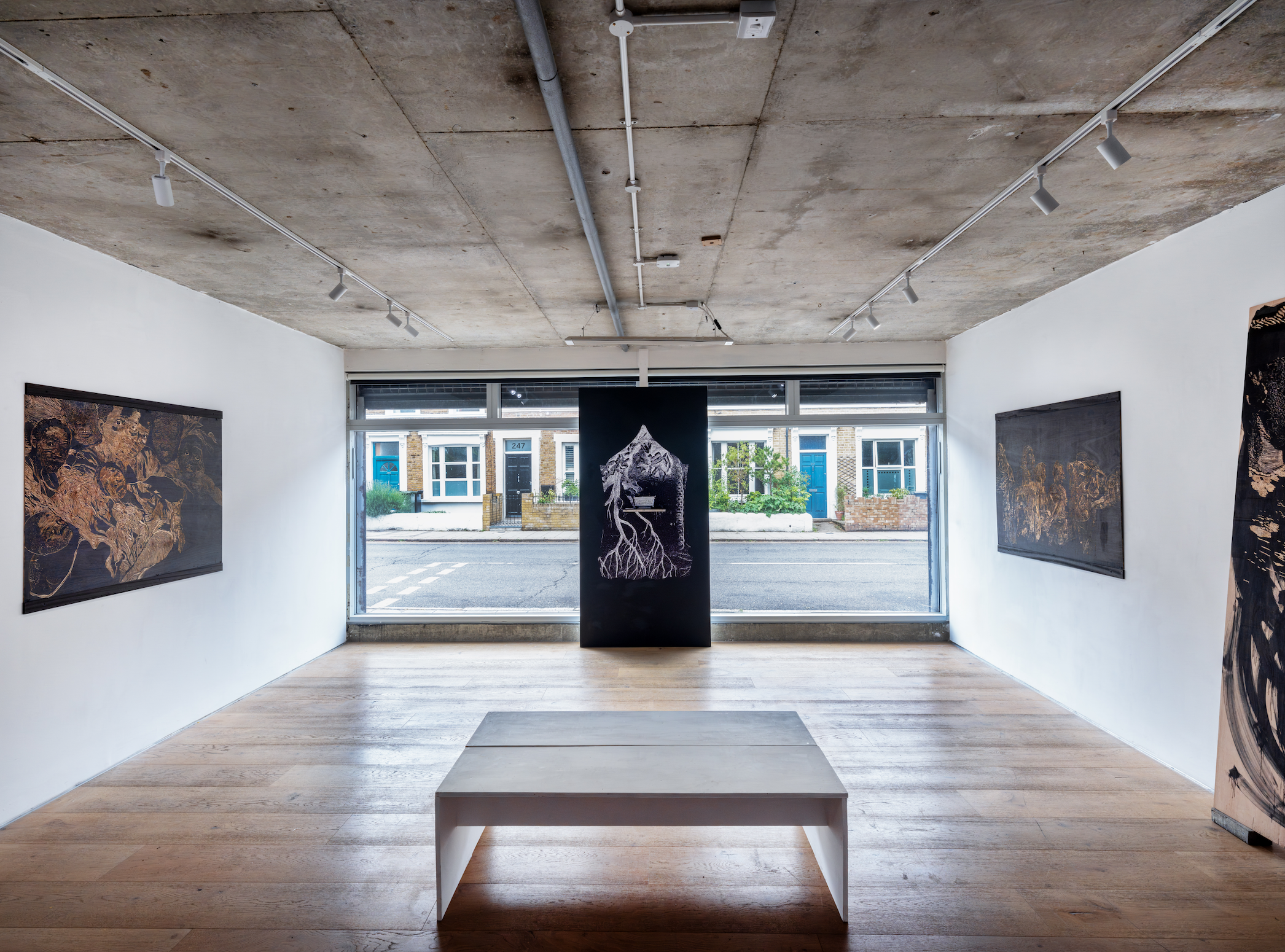
In this exhibition Deeqa Ismail's ‘eats the wood’, using a process of removal through woodcutting. She carves into the same block repeatedly, cutting away the surface in stages. With each pass, more is lost. What is removed cannot be restored, and the final image is not constructed through accumulation but through irreversible subtraction.These 3 pieces [insert title] are site specific, created as a response to the curation and the other artists, focusing on celebration, normalizing our aliveness and our legibility despite ongoing crises.
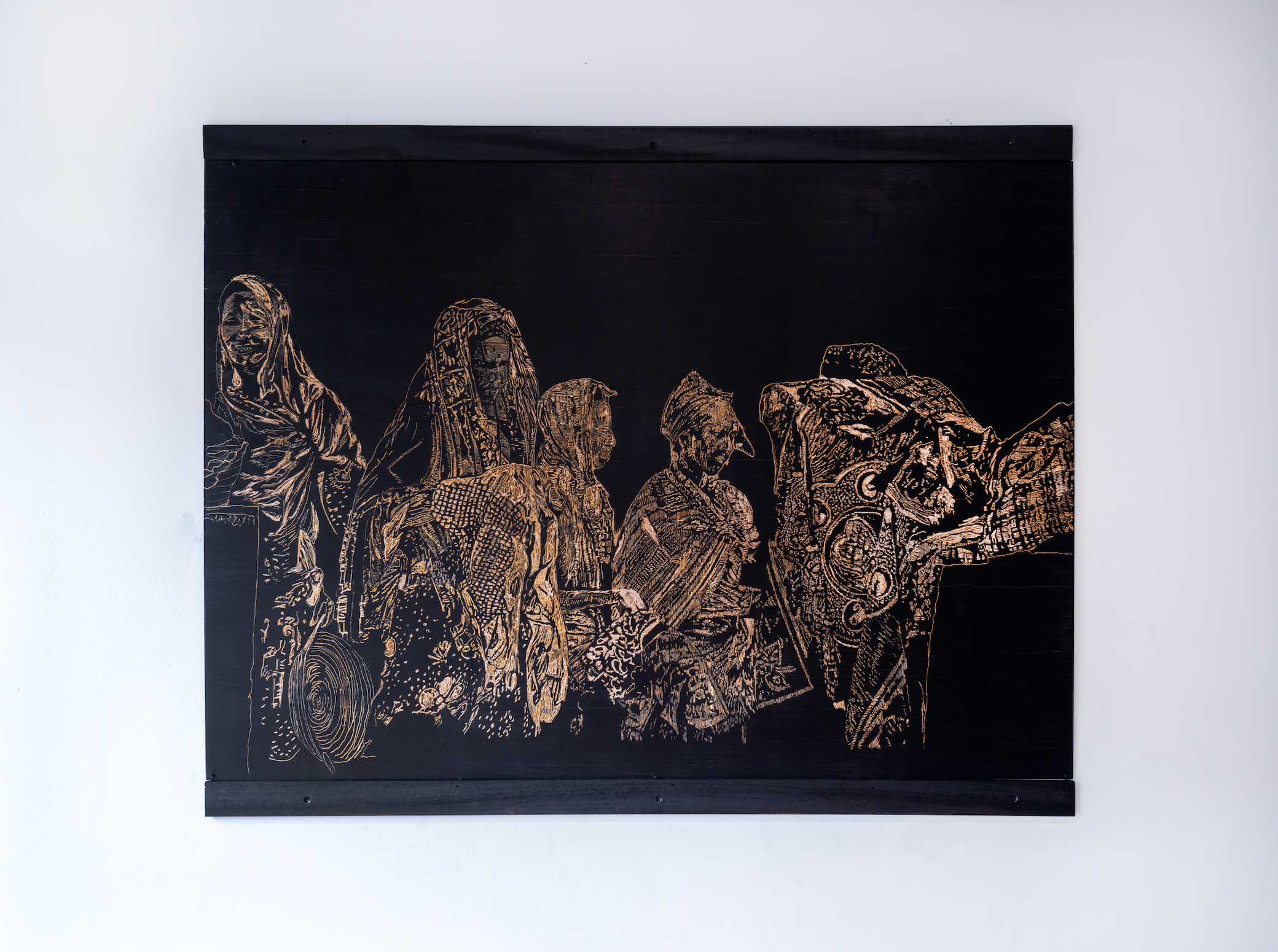
BAATI (2026) Woodcut and ink on plywood, 140 × 100 cm, Photography by Vadimovna Studio
While carving, Ismail has to think in layers as the composition begins to emerge. This process in Somali culture is called qoris and historically done by men yet Ismail challenges patriarchy by mastering the wood with skill and precision. We see here memories of her family archive where women gather at a beach, a market and dance together on three separate occasions. The black and wooden void becomes a state of perpetual presence, always there to tap into.
Rita Keegan
Rita Keegan merges the old with the new in her print Family Histories , within that merge, older understandings are honoured and change is welcomed. Keegan, being one of the founders of the famous Brixton Art Gallery, embedded herself into the Black British Arts Movement as both an artist and curator from the Bronx, laying the groundwork for Black British and Black American solidarity. Her show here at 198 in [insert year] is remembered through this exhibition and brings that history into the conversation.
The print adorns our reading corner accompanied by selections from the Rita Keegan foundation archive and a curatorial selection by myself, Ariel Collier.
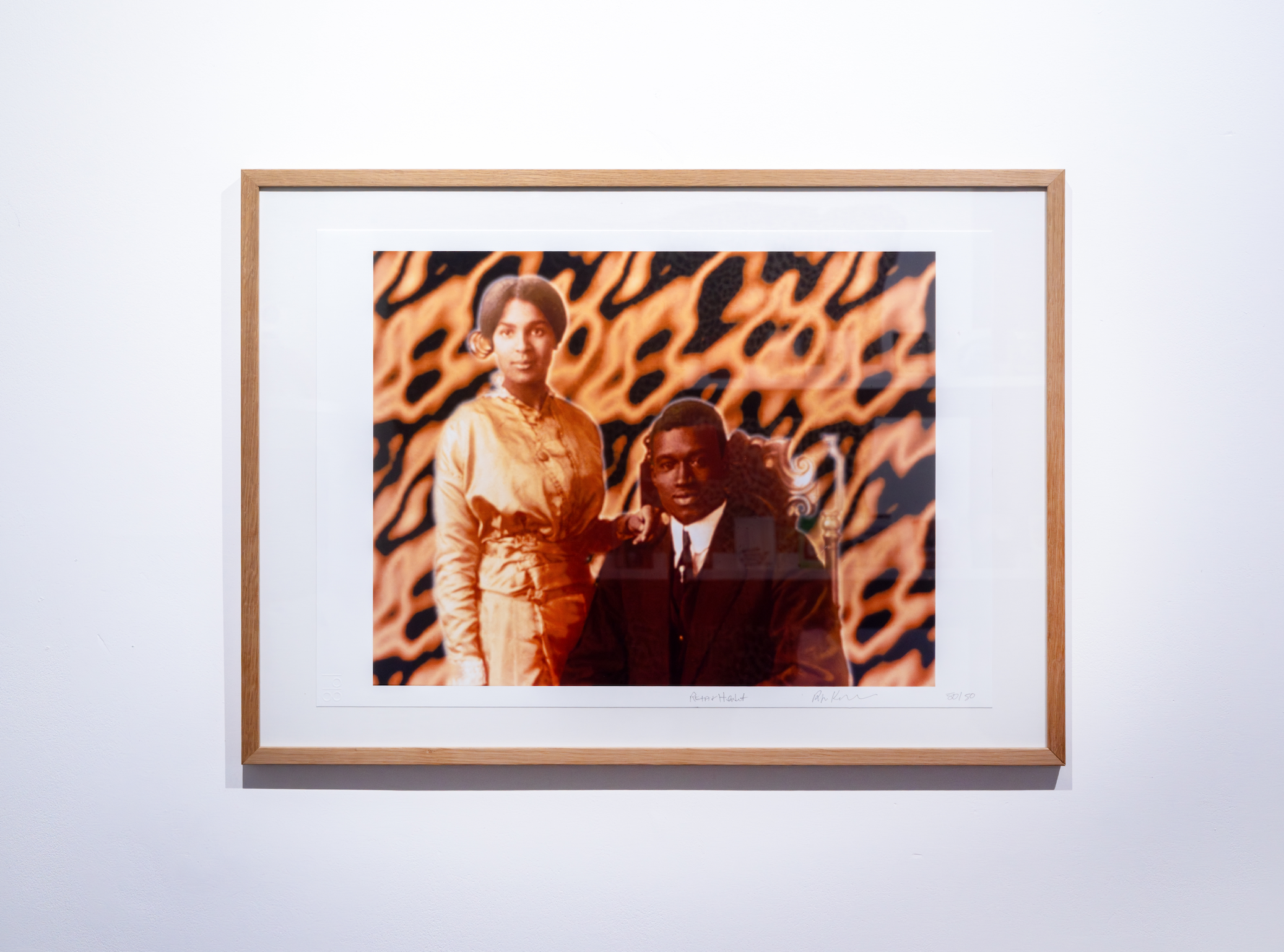
Rita and Herbert 1998, print on paper, 75 x 52cm, 1998, Photography by Vadimovna Studio
